Eyeteeth: A journal of incisive ideas
Heart As Arena
bjkeefe
DESIGN FROM THE INSIDE OUT




Assorted on India
14 years ago


After much hand-wringing, he decided to return to the United States to attend Yale, which overlooked his threadbare high school transcript. He considered majoring in Russian until Jeremy Bulow, a classmate who is now an economics professor at Stanford, began evangelizing about economics.
Mr. Rogoff took an econometrics course, reveling in its precision and rigor, and went on to focus on comparative economic systems. He interrupted a brief stint in a graduate program in economics at the Massachusetts Institute of Technology to prepare for the world chess championships, which were held only every three years.
After becoming an “international grandmaster,” the highest title awarded in chess, when he was 25, he decided to quit chess entirely and to return to M.I.T. He did so because he had snared the grandmaster title and because he realized that he would probably never be ranked No. 1.
He says it took him a long time to get over the game, and the euphoric, almost omnipotent highs of his past victories.
“To this day I get letters, maybe every two years, from top players asking me: ‘How do I quit? I want to quit like you did, and I can’t figure out how to do it,’ ” he says. “I tell them that it’s hard to go from being at the top of a field, because you really feel that way when you’re playing chess and winning, to being at the bottom — and they need to prepare themselves for that.”
He returned to M.I.T., rushed through what he acknowledges was a mediocre doctoral dissertation, and then became a researcher at the Federal Reserve — where he said he had good role models who taught him how to be, at last, “professional” and “serious.” ...
And, unlike Mr. Rogoff, she has never been hired by an Ivy League school. But measured by how often her work is cited by colleagues and others, this woman whom several colleagues describe as a “firecracker” is, by a long shot, the most influential female economist in the world.
Like Mr. Rogoff, she took a circuitous route to her present position.
Born in Havana as Carmen Castellanos, she is quick-witted and favors bright, boldly printed blouses and blazers. As a girl, she memorized the lore of pirates and their trade routes, which she says was her first exposure to the idea that economic fortunes — and state revenue in particular — “can suddenly disappear without warning.”
She also lived with more personal financial and social instability. After her family fled Havana for the United States with just three suitcases when she was 10, her father traded a comfortable living as an accountant for long, less lucrative hours as a carpenter. Her mother, who had never worked outside the home before, became a seamstress.
“Most kids don’t grow up with that kind of real economic shock,” she says. “But I learned the value of scarcity, and even the sort of tensions between East and West. And at a very early age that had an imprint on me.”
With a passion for art and literature — even today, her academic papers pun on the writings of Gabriel García Márquez — she enrolled in a two-year college in Miami, intending to study fashion merchandising. Then, on a whim, she took an economics course and got hooked.
When she went to Florida International University to study economics, she met Peter Montiel, an M.I.T. graduate who was teaching there. Recognizing her talent, he helped her apply to a top-tier graduate program in economics, at Columbia University.
At Columbia, she met her future husband, Vincent Reinhart, who is now an occasional co-author with her. They married while in graduate school, and she quit school before writing her dissertation to try to make some money on Wall Street.
“We were newlyweds, and neither of us had a penny to our name,” she says. She left school so that they “could have nice things and a house, the kind of things I imagined a family should have.”
She spent a few years at Bear Stearns, including one as chief economist, before deciding to finish her graduate work at Columbia and return to her true love: data mining. “I have a talent for rounding up data like cattle, all over the plain,” she says.
Be grateful. Yes, I often hear from people that they are tired of being admonished to be grateful. It’s no wonder there is a sort of societal “gratitude fatigue” given how much press this concept have received in self-help literature over the past ten years or so. However, there’s a good reason why this advice persists not just from modern authors, but also from the earliest philosophers and religious writers. It works. Gratitude for what one has in their life is a critical part of contentment. Without gratitude, contentment will always be elusive. The results of the first major study on the efficacy of gratitude for cultivating contentment and happiness is presented in a recent book, Thanks! How Practicing Gratitude Can Make You Happier, by Robert A. Emmons. He is a big proponent of gratitude journaling, recommending that writing out a few items for which we’re grateful every day will help instill a “grateful heart” and contribute to us “loving what we have.”

But Vorster was unapologetic and proudly compared his nation to Nazi Germany: “We stand for Christian Nationalism which is an ally of National Socialism . . . you can call such an anti- democratic system a dictatorship if you like,” he declared in 1942. “In Italy it is called Fascism, in Germany National Socialism and in South Africa Christian Nationalism.” As a result of their pro-Nazi activities, Vorster and van den Bergh were declared enemies of the state and detained in a government camp.
Three decades later, as Vorster toured Yad Vashem, the Israeli government was still scouring the globe for former Nazis— extraditing or even kidnapping them in order to try them in Israeli courts. Yet Vorster, a man who was once a self- proclaimed Nazi supporter and who remained wedded to a policy of racial superiority, found himself in Jerusalem receiving full red-carpet treatment at the invitation of Israeli prime minister Yitzhak Rabin....
In April 2006, the Israeli Defense Ministry intervened to block South Africa’s release of a 1975 agreement outlining the planned military cooperation between the two countries, which is signed by Defense Ministers Shimon Peres and P. W. Botha. The Directorate of Security of the Defense Establishment (known by its Hebrew acronym Malmab) insisted that declassification of the 1975 document or any others would endanger Israel’s national security interests.
Earlier today President Obama called the U.S. Men’s World Cup Soccer team. The President congratulated them on their extraordinary victory and told them that while he was meeting with General Petraeus in the Oval Office, he could hear the rest of the West Wing erupt when Landon Donovan scored the game winner. The President then congratulated Donovan on the game-winning goal, asked Tim Howard how his ribs were feeling and asked Clint Dempsey how his lip was doing. The President wished the team good luck on Saturday and made sure they knew that the entire country was cheering them on.

Perhaps nothing has been more influential in determining the popular perception of the Italian game than furbizia, the art of guile. For it is no overstatement to say that Italians enjoy a reputation as the dirtiest players in the game and, dryly put, as cheaters.
To remove these bizarre incentives, soccer should follow the ice hockey approach to penalties, after correcting for the difference in team size (six players for hockey vs. 11 for soccer) and game length (60 minutes for ice hockey vs. 90 minutes for soccer).
While the anecdotal (and video) evidence against Italy is strong, it would be useful to have a statistical measure of diving on the basis of which international comparisons could be made. One possibility is to use data on fouls suffered. For instance, in the latest game, Italy was fouled 23 times while New Zealand suffered just 10 fouls. Either New Zealand is an unusually aggressive (or clumsy) team, or a number of the "fouls" suffered by Italy were simulated.
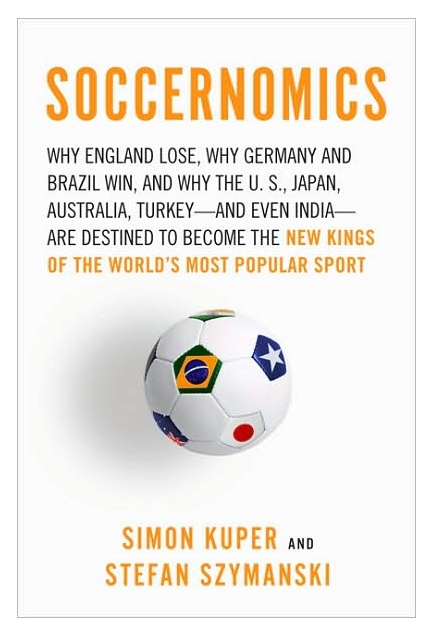
Now onto more substance about the evolution of soccer: historically, the 1962 World Cup is an important turning point, since it marks the advent of modern defensive strategies in soccer. Until that World Cup, the average scoring had always exceeded 3 goals per game. In the 1962 World Cup, the goal scoring dropped significantly below 3 goals, to 2.78 goals per game, never to recover.
Defensive strategies have further taken hold. Nowadays we would be satisfied if we were witnessing ‘a mere’ 2.78 goals per game. In the seven World Cups between 1980 and 2006, the average had already dropped further to only 2.53 goals per game.

"The BP oil spill in the Gulf of Mexico, one of only two known Atlantic bluefin spawning grounds, has only intensified the crisis. By some estimates, there may be only 9,000 of the most ecologically vital megabreeders left in the fish’s North American stock, enough for the entire population of New York to have a final bite (or two) of high-grade otoro sushi. The Mediterranean stock of bluefin, historically a larger population than the North American one, has declined drastically as well. Indeed, most Mediterranean bluefin fishing consists of netting or “seining” young wild fish for “outgrowing” on tuna “ranches.” Which was why the Greenpeace craft had just deployed off Malta: a French fishing boat was about to legally catch an entire school of tuna, many of them undoubtedly juveniles."-Tuna’s End
-Turks Put Twist in Racy SoapsIf this seems like a triumph of Western values by proxy, the Muslim context remains the crucial bridge. “Ultimately, it’s all about local culture,” said Irfan Sahin, the chief executive of Dogan TV Holding, Turkey’s largest media company, which owns Kanal D. “People respond to what’s familiar.” By which he meant that regionalism, not globalism, sells, as demonstrated by the finale of “Noor” last summer on MBC, the Saudi-owned, Dubai-based, pan-Arab network that bought rebroadcast rights from Mr. Sahin. A record 85 million Arab viewers tuned in.
That said, during the last 20 years or so Turkey has ingested so much American culture that it has experienced a sexual revolution that most of the Arab world hasn’t, which accounts for why “Noor” triumphed in the Middle East but was considered too tame for most Turks. Even Mr. Sahin wonders, by contrast, whether the racier “Ask-i Memnu,” a smash with young Turks, threatens to offend Arabs unless it is heavily edited.
“You have to understand that there are people still living even in this city who say they only learned how to kiss or learned there is kissing involved in lovemaking by watching ‘Noor,’ explained Sengul Ozerkan, a professor of television here who conducts surveys of such things. “So you can imagine why the impact of that show was so great in the Arab world and why ‘Ask-i Memnu’ may be too much.
“But then, Turkey always acts like a kind of intermediary between the West and the Middle East,” she added.

On five Saturdays this month and next, Mr. Barman, Mr. Hinojosa and 54 other artists are attending a class paid for by the City of New York that is intended to help them turn their creative works into money.-Creative Types, Learning to Be Business-Minded
“Does everyone have Excel?,” Peter Cobb, a lawyer and administrator at the New York Foundation for the Arts, which runs the program, asked the class last Saturday. “For next week, your assignment is to make a list of all your expenses for 2009.”
The sighs and complaints that followed were proof of the challenging task Mr. Cobb and his colleagues have taken on: trying to teach people who like to color outside the lines about drawing up business plans, budgeting and making a sales pitch...
“Artists are not taught to plan,” said Jackie Battenfield, a painter and the author of “The Artist’s Guide: How to Make a Living Doing What You Love.” Too often, she said, they’re “going in circles, and that’s very demoralizing.”
This is the first time the city has financed such a program, though others, like one at the Bronx Museum called Artists in the Marketplace, have long strived to help artists manage their careers.


People that are put in a condition of feeling out of control are more likely to see something in this, which is allegedly patternless. In other words, the propensity to find these patterns goes up when there's a lack of control. For example, baseball players are notoriously superstitious when they're batting, but not so much when they're fielding. Because fielders are successful 90 to 95 percent of the time. The best batters fail seven out of 10 times. So their superstitions, their patternicities, are all associated with feelings of lack of control and so forth.-The pattern behind self-deception

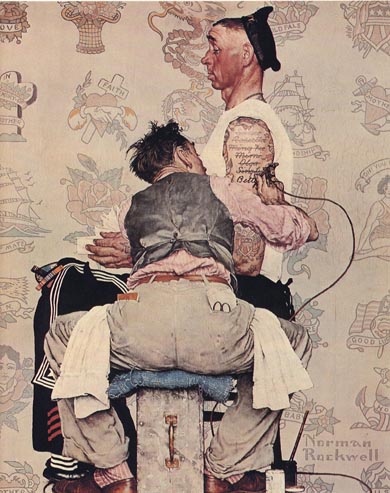
The unit’s lore is worthy of its own reality TV series — sham couples caught red-handed, yes, but also quirky ones whose authenticity surprised everyone. The gay man who claimed he had suddenly found his female soul mate (denied); the recovering alcoholic who had lost his memory (approved); the man who volunteered that he had erectile dysfunction in an attempt to explain why his mate did not know the location of his nine tattoos (unsuccessful); the elderly citizen who lost an arm in a subway accident, but found happiness with a young Caribbean wife (successful).
“We can’t impose our definition of marriage, especially being in New York,” said Maria Guerra, a Stokes supervisor. “We’ve seen it all.”
I am undergoing radiation and drug treatment for cancer.
The drug is Erbitux, which at least is something I had heard about. (You may recall that was the drug involved in the Martha Stewart lying-to-the-S.E.C. case.) It has made my face look worse than anyone’s face ever looked when I was in high school.
I know that it is not news that radiation treatment can be miserable. I did not do all the homework I could have done, so perhaps I should have been better prepared.
But the pain involved is more than I have ever experienced. It is virtually impossible for me to eat. I am losing weight at an impressive rate, to the dismay of the radiation doctor. I have little energy, which is probably both because of the radiation directly and because of the lack of nutrition...
It is not fun, but it has been inspiring. In a way, I am happier about my life than at any time I can remember. Clint Eastwood once asked, “Do you feel lucky?” My answer is a shouted yes...
I am 62, and have had the honor of being a financial columnist here for more than 20 years. I have been happily married for 26 years, and last Friday saw our son graduate from high school. He will be attending an excellent college in the fall.
I hope to have a lot more years. But I’ve had a lot already, and they have been better than a lot of people have any reason to hope for. I am grateful.
This is trite but also so, so true: A brush with mortality turns out to be the best way to appreciate how blue the sky is, how sensuous grass feels underfoot, how melodious kids’ voices are. Even teenagers’ voices. A friend and colleague, David E. Sanger, who conquered cancer a decade ago, says, “No matter how bad a day you’re having, you say to yourself: ‘I’ve had worse.’ ”
SPIEGEL: Do you go out for a drink at night too sometimes?
Carlsen: Rarely. I prefer to chat with friends on the Internet or play poker online.
SPIEGEL: For money?
Carlsen: Of course. For what else?
Upside-down gardening, primarily of leggy crops like tomatoes, cucumbers and peppers, is more common partly because of the ubiquity of Topsy Turvy planters, which are breathlessly advertised on television and have prominent placement at retailers like Wal-Mart, Walgreens and Bed Bath & Beyond. According to the company that licenses the product, Allstar Products Group in Hawthorne, N.Y., sales this year are twice last year’s, with 20 million sold since the planter’s invention in 2005. Not to be outdone, Gardener’s Supply and Plow & Hearth recently began selling rival upside-down planters. “Upside-down gardening is definitely a phenomenon,” said Steve Wagner, senior product manager for Plow & Hearth.
The advantages of upside-down gardening are many: it saves space; there is no need for stakes or cages; it foils pests and fungus; there are less, if any, weeds; there is efficient delivery of water and nutrients thanks to gravity; and it allows for greater air circulation and sunlight exposure.
“What the statistics point to is a rise in Facebook, a decline in blogging, and before that, a decline in personal Web pages. The trend is clear, she said — Facebook is displacing these other forms of online publication'

According to Pines, the piece she created for this issue of the magazine, above, titled, "Corporations," isn't just about the way accounting practices are "wacky on such a large scale for so many businesses." To her, "everything, from the way we are trying to make up for personal losses to the way the economy is being propped up, feels like it's being put back together imperfectly

This series is about the topography of money in human consciousness, the constant parade of numbers in everyday life. The figures are at once imaginary and very real. I’m interested in the power numbers have in our lives, and how much they dictate, both psychologically and actually.

In an overflowing salesroom at Christie’s, six bidders vied for “Nude, Green Leaves and Bust,” which depicts the artist’s mistress Marie-Thérèse Walter, reclining naked. When the canvas last changed hands, in 1951, it sold for $19,800. But this time, “Nude, Green Leaves and Bust” brought $106.5 million.
This program is intended for individuals who want to acquire advanced training in the theory, methods, and practices in the economics of education. It is a selective program to prepare individuals for leadership roles in teaching, research, or administrative settings.
The coursework for this program consists of three parts: core courses, courses in research methods, and courses in a specialized area of study. The available specialized areas include: education and economic development, education and transition to work, educational finance, economic evaluation and cost analysis in education, economics of urban and minority education, economics of educational technology, teachers markets, and others.

“In the old days, the bigger the space in a hotel, the more luxury you had,” said Simon Woodroffe, the chain’s founder. “But very, very rich people stay in reasonably small spaces on luxury yachts, and very, very rich people travel in extremely small spaces on Learjets.”...
But these new hotels are even smaller, almost like chic youth hostels, said Lalia Rach, dean of the Tisch Center for Hospitality, Tourism and Sports Management at New York University. The emphasis on style over space — one way to make the economics work for a budget hotel in an expensive urban center, Dr. Rach said — appeals to out-of-towners who want to feel like New Yorkers, right down to fleeing a shoebox to experience the city’s culture and nightlife.
“This is attractive to a very large market,” she said, referring to travelers ages 16 to 30. “They want to live the destination, not live the hotel.”
At the same time, the theory goes, these hotels need to be destinations for the locals — or at least to feel as if they could be — for guests to sense that they are tapping into the real New York. So Yotel, whose futuristic rooms feature purple mood lighting and private monsoon showers, plans to turn part of its fourth floor over to a restaurant, bar and 20,000-square-foot outdoor patio.
The Pod Hotel offers hip, convenient, and personalized accommodations for the stylish and spendthrifty traveler
"I was lucky enough to get an upgrade to the sleeper bed in British Airways first class. I went to sleep with the conundrum of how to make a Japanese capsule hotel acceptable in the west and woke up realising the solution was around me: all I needed to do was find the designer of the BA first class cabin and ask them to help me design a hotel."
The talk will focus on the main theme of the book, which is how the military, porn and food industries have been the biggest drivers of technology over the past century. The links between these three are not immediately clear, but they are all rooted in humanity's basest instincts. In essence, my book is about how the worst parts of human vice have resulted in some truly incredible achievements
It's no secret that porn is a major force on the internet - an estimated 25 per cent of all search requests are for adult content, while about one third of all websites are pornography-related. About 28,000 people are watching porn of some kind online , spending about $89 doing so, every second.
Porn, despite being commonly thought of as a negative by-product of one of our basest instincts (the need to have sex), has been a big force for innovation over the past century.
Kissing as part of sexual foreplay is common in the West but virtually unknown in other parts of the world (Ford & Beach, 1965). There are some cultures where penetration was the key element to intercourse, and neither foreplay nor afterplay was recorded. Ford and Beach pointed out that physical pain and biting are sometimes permitted as part of sexual foreplay and, therefore, such behaviors are likely to be readily incorporated into the sexual repertoire
Contemporary studies, for instance, have shown that married people are less likely to get pneumonia, have surgery, develop cancer or have heart attacks. A group of Swedish researchers has found that being married or cohabiting at midlife is associated with a lower risk for dementia. A study of two dozen causes of death in the Netherlands found that in virtually every category, ranging from violent deaths like homicide and car accidents to certain forms of cancer, the unmarried were at far higher risk than the married. For many years, studies like these have influenced both politics and policy, fueling national marriage-promotion efforts, like the Healthy Marriage Initiative of the U.S. Department of Health and Human Services. From 2006 to 2010, the program received $150 million annually to spend on projects like “divorce reduction” efforts and often cited the health benefits of marrying and staying married.


Mr. Willey, who grew up in Virginia and Massachusetts and received a bachelor’s degree in fine arts from the School of the Museum of Fine Arts in Boston and Tufts University, has done all sorts of painting: a rendering of the Last Supper for a juice stand, in which a smoothie occupies Jesus’s position and fruit stands in for the disciples; koi ponds on cement floors; and fallen flowers so lifelike that people stoop to pick them up.
“With murals, people think of the post office, they think of Diego Rivera and civil war and epics,” he says. “I paint on walls intimately within your home, whatever those needs are.”...
A few years ago, after he and a friend started a company called TellmeOmuse, which sells products related to Greek myths and epics, he finally did, painting the winged horses on his walls.
They are the horses of Helios, the Greek sun god, Mr. Willey explains. In Greek mythology, Helios leaves his palace in the east in the morning and charges into the sky, descending to his palace in the west at night.
“The part I love is that he gets up and does it again tomorrow,” Mr. Willey says. “That is what a painter’s life is like, it’s how arduous. There is a quote by van Gogh, ‘Not a day without a line.’ You don’t always know what is going to happen, but if you don’t get up and climb the horses out of the palace, how are you going to ever know?”
It's tempting to think that human beings very early in their history used music in a similar way. And there can be little question that a male with a good singing voice in our own society today is still a source of sexual attraction and excitement. What else is a serenade? Watch a pop concert! And just as among the great reed warblers, quality counts. Females have been selecting males with a versatile larynx since way back in our ancestry.
Today young men sing together to generate camaraderie, and religious people use song to generate the deepest and most profound emotions among themselves and their listeners. But the prime function of song is something else. Shakespeare wondered if music was the food of love. Well, vocally at least, it certainly was. And what is more, it still is.

First exhibited in 1893 in Berlin, The Scream was the culmination of Munch's magnum opus, a series of paintings called The Frieze of Life. This depicted the course of human existence through burgeoning love and sexual passion to suffering, despair and death, in Munch's highly original, proto-expressionist style.
His titles, from Death in the Sickroom, through Madonna to The Vampire, suggest just how directly and unironically he sought to depict the anxieties of late-19th century Europe.
But against all Munch's images, it is The Scream which stands out as the work which has seared itself into the Western imagination. It remains widely celebrated for capturing the torment of existence in what appeared to many in Munch's time to be a frightening, godless world.
Munch himself endured a childhood beset by illness, madness and bereavement. At 13, he was told by his father that his tuberculosis was fatal. But he survived and went on to become a major figure first in the Norwegian, then the European, avant-garde.
He became involved with two of the great playwrights of the period. He collaborated with his fellow countryman Henrik Ibsen and became a close friend of the tempestuous Swede August Strindberg. He admired the work of Post-Impressionist painters such as Paul Gauguin and Vincent van Gogh and the philosophy of Friedrich Nietzsche, all of whom influenced his art.
Munch's own influence resonated through the 20th century, from German Expressionism to Andy Warhol and beyond. His work, particularly The Scream, remains powerful today.
Time and again, the reader wonders just how much van Gogh and his brother trust each other. In the letter of August 14, 1879, for instance, he complains that Theo has advised him to give up his quest to be an artist. "And, joking apart, I honestly think it would be better if the relationship between us were more trusting on both sides," van Gogh suggests, before apologizing for the possibility that so much of the family sorrow and discord have been caused by him. These look and sound like letters to his brother, but in essence we are reading fund-raising proposals....
So what did van Gogh see as his own strengths and weaknesses? In an early letter to Theo (May 8, 1875), he quotes Renan: "Man is not placed on the earth merely to be happy; nor is he placed here merely to be honest, he is here to accomplish great things through society, to arrive at nobleness, and to outgrow the vulgarity in which the existence of almost all individuals drags on." This is a vision he lived. But at what cost? In one of his late letters to his brother (July 2, 1889), van Gogh says that he was "infinitely too harsh . . . in claiming that it was better to love painters than paintings." The reader now has to ask similar questions. Van Gogh becomes less likable and more lovable, more familiar and yet somehow ever stranger. In reading and studying these books, we can at once achieve both ends.


Like many of his generation — Mr. Nouvel is 64 — he retains a stubborn, some might say naïve, belief that architecture should make us alert to the conflicts that shape the modern city rather than conceal them.
That attitude is apparent in the mixed signals the building sends. Seen from across the West Side Highway, the tower’s twinkling facade, with its hundreds of irregularly shaped windows tilted at odd angles to reflect fragments of sky or the surrounding city, offers a striking counterpoint to the soft, sail-like curves of Mr. Gehry’s creation. Rows of older brick buildings flank them to the north and south, and the contrast between glass and masonry, straight and curved lines, creates a nice rhythm along what was once a bleak strip of decrepit offices and warehouses.

I stumbled upon my method of “throw painting” in 1987 while still a student of figurative art. Plopping various amounts of black and white acrylic into a spoon and hurling the contents would yield unpredictable patterns on the canvas. It was like assembling a puzzle, of which the image could not have been foreseen beforehand.
And discovering imagery was my primary interest. Although this method of paint application had previously been identified with formalist abstraction, I utilized it for its image making potential. I was excited by the hallucinatory early James Ensor, early and late Jackson Pollock and the recent work of Malcolm Morley. In these artists scenes emerged from the materiality of the paint, in a fluctuating dance between surface and depth. If I were to simply state my goal, I’d echo Morley’s remark that he wanted to depict reality as if “ the world were made of paint”.
"If I go downstairs to investigate a noise at night, with a gun in my hand, and find myself face to face with a burglar who has a gun in his hand, there is a danger of an outcome that neither of us desires. Even if he prefers to just leave quietly, and I wish him to, there is danger that he may think I want to shoot, and shoot first."
In his memoir Speech-less, Matt Latimer, a speechwriter for both Rumsfeld and Bush, describes Gates as "our Winston Wolf," the Harvey Keitel character in Pulp Fiction who comes to dispose of the bodies and take care of the bloody mess after an accidental killing. "Wolf was a case study of robotic efficiency, overseeing an elaborate cleanup while calmly drinking a cup of coffee," writes Latimer. "That's what President Bush wanted — a cold-blooded competent cleaner."


"I feel as if I have been born again," he said, as some of France's leading collectors and curators jostled for position to see his collages. "Now I feel like a prince. A pauper can become a prince. But he can go back to being a pauper too."...
Barledeanu describes himself as a "director" of his own films and considers each collage to be a movie in itself. While many are light-hearted, others are darker, infused with black humour and often focusing on the man he calls his "greatest fear". "I knew that if he knew about my work Ceausescu would not sleep in peace in his grave," he said. "If people had found out about my work they could have chopped my head off … But this is my revenge."...
Whatever the world thinks, Barladeanu says he will carry on working regardless. "It's like eating pie or sandwiches. It fulfils me," he said in his fast-paced Romanian slang. "If I were reincarnated in another life I would still be making collages, and if I could take them to the moon I would."


